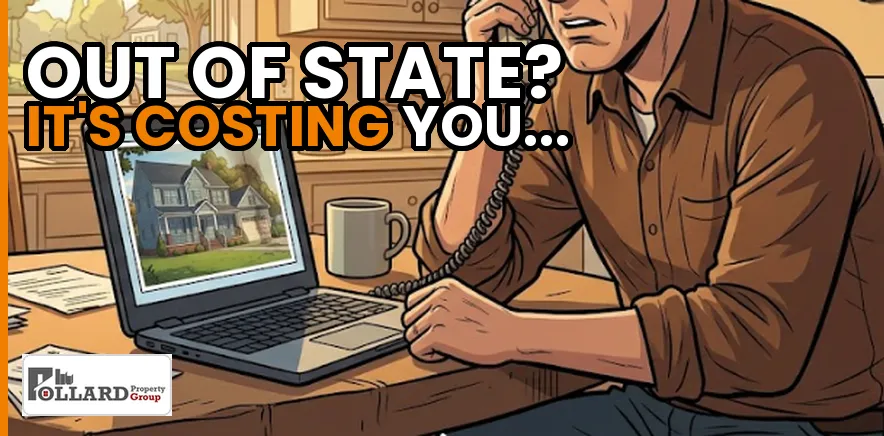
Managing a Waldorf Rental From Out of State? The Deferred-Maintenance Trap Is Costing Absentee Owners Thousands
Every absentee owner manages a rental the same way at first — from a distance, by phone, trusting that "no news is good news." The ones who lose money are the ones who never find out that silence usually means a small problem has had months to become an expensive one.
One Waldorf owner in Texas found out her tenant's slow leak had been running for four months — not from her tenant, but from a mold remediation invoice.
Distance turns small maintenance issues into large ones because the feedback loop that would normally catch a problem early — a landlord noticing something on a routine visit — simply doesn't exist. A leak that would cost under $400 to fix in week one can turn into $9,600–$13,200 in mold remediation and subfloor repair by month four, and by then it's no longer a maintenance line item — it's a structural and health issue that has to be resolved before the property can be shown, rented, or sold.
If it's been a while since you've had eyes on your Waldorf-area property, that gap is where the cost is building.
-> book.waldorfpropertyrescue.com/strategy
Why Distance Turns Small Repairs Into Big Ones
Every day a minor issue goes unreported is a day it's getting worse, unmonitored. Out-of-state owners are almost entirely dependent on their tenant choosing to report a problem promptly — and not every tenant does.
The Warning Signs an Absentee Owner Never Sees First
A water stain, a musty smell, a slow drain — these get noticed by whoever is physically in the home, not by an owner three states away reading a text message description of it weeks later.
What "Deferred" Actually Costs Over a Year
Maintenance that gets pushed back doesn't stay the same size — it compounds. A deferred roof repair becomes ceiling damage; a deferred leak becomes mold; deferred pest control becomes structural damage. Each delay adds a multiplier, not just a delay.
When a Distressed Absentee-Owned Property Becomes a Sell-Not-Fix Decision
At a certain point, the cost of catching a property up exceeds what an owner can recoup by staying in the landlord role. That's a numbers decision, not a failure — and it's one that's easier to make with real numbers in front of you instead of a guess.
Owners with rentals in Waldorf, and zip codes 20601 and 20603, are managing this exact distance problem right now, whether they've noticed the signs yet or not.
$11,800 total for mold remediation and subfloor replacement in a Waldorf rental owned by an out-of-state landlord — the original leak, caught within a week, would have cost under $400 to fix.
FAQ
How do I know if a property I own from out of state has deferred maintenance building up?
The clearest sign is time since your last in-person look at the property — if it's been more than a few months, assume something has gone unreported.
Is it better to fix an absentee-owned rental before selling, or sell as-is?
It depends on how far the deferred issue has progressed — sometimes a targeted repair protects value, sometimes the numbers favor selling as-is and letting the next owner handle it.
What if I haven't been back to the property in over a year?
That's exactly the situation worth getting real numbers on before deciding anything — the gap between what you assume is happening and what's actually happening tends to be the expensive part.
On a Free Strategy Call, we walk through exactly what your property's current condition and this market mean for your options — whether that's a targeted repair plan or a straightforward as-is sale.
-> book.waldorfpropertyrescue.com/strategy
