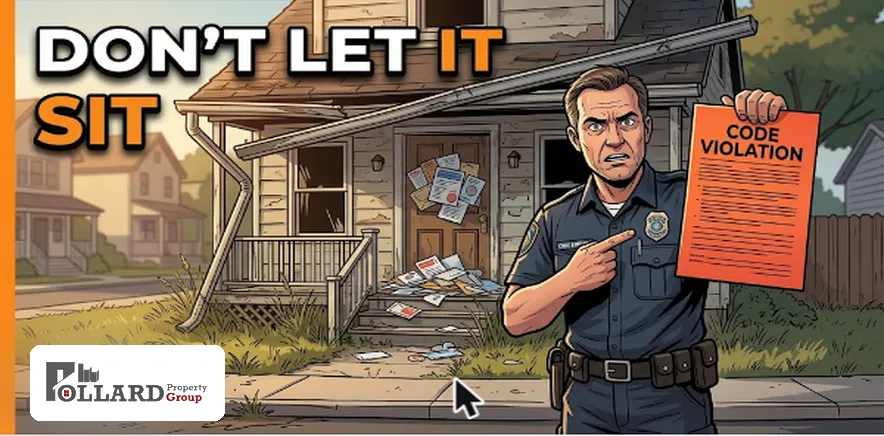
Why Vacant Homes in St. Charles Are Drawing Code Complaints Faster Than They Used To
An Empty House Does Not Stay Quiet for Long in St. Charles Anymore
Overgrown grass. An unsecured side door. A missed trash pickup. Those three things, on their own, would have been nothing worth a phone call a few years ago. Together, they added up to three separate code complaints on one vacant St. Charles property before its out-of-state owner even realized the house had been sitting untouched for two months. By the time she got the county's letter, the fines had already started, and so had the neighbors' calls to the non-emergency line.
That is the part most owners of a vacant Charles County property do not expect: the house does not sit quietly anymore. It draws attention, and now it draws it fast.
What a Vacant Property Actually Costs When Code Enforcement Gets Involved
A vacant house that is properly secured and maintained costs an owner routine upkeep, lawn service, a security check, insurance, typically $150 to $300 a month in Charles County. A vacant house that draws code complaints costs far more. Charles County can issue citations that start in the $100 to $500 range per violation and escalate with repeat offenses, and an owner who does not respond can eventually face liens filed against the property itself, which follow the home into any future sale.
The real cost is rarely the first citation. It is the pattern: unaddressed violations invite more complaints, more complaints invite more inspections, and a property that stays on the county's radar becomes harder, not easier, to sell quietly and quickly.
If you own a vacant property in Charles County and code complaints are stacking up, a Free Strategy Call can walk through your fastest, cleanest path forward. Book your call here.
What to Do Before the Next Complaint Comes In
1. Confirm exactly what violations are on file
Most owners find out about code complaints piecemeal, a letter here, a neighbor's comment there. Contacting Charles County code enforcement directly to get the full, current list is the fastest way to know exactly what needs attention and what deadlines are already running.
2. Secure the property the same week
Unsecured doors and windows are one of the fastest paths to a new complaint, and they invite far more serious problems than a citation. A basic lockup and boarding pass, even a temporary one, closes off the most common trigger for new violations.
3. Handle the visible exterior first
Overgrown grass, accumulated mail, and trash are what neighbors actually see and what they actually call in about. Addressing the exterior first, even before deeper issues are resolved, reduces the odds of a new complaint landing while you plan your next step.
4. Get a realistic read on the property's condition and value as-is
A property that has sat vacant for months often needs work most owners have not budgeted for. Knowing the real as-is value, not the value from three years ago, shapes whether repairing and listing traditionally or selling as-is makes more financial sense.
5. Set a decision deadline, not just a to-do list
Vacant properties tend to drift without a deadline attached. Every week without a decision is another week of carrying costs, another chance at a new complaint, and another step closer to a lien. Picking a real date to have a plan in place changes the outcome more than any single repair does.
St. Charles Is Not the Only Neighborhood Seeing This
Code enforcement activity on vacant properties has picked up across St. Charles, Waldorf, and White Plains, with zip codes 20601 and 20602 showing some of the most frequent complaint activity in the county this year. Absentee owners managing a property from out of state are the most common group affected, simply because they are the least likely to catch a problem in the first 48 hours.
A St. Charles Owner's Actual Numbers
One St. Charles owner let code violations accumulate for four months while weighing whether to repair and list the home traditionally. By the time she acted, she had paid $1,850 in cumulative fines and a lien filing fee, on top of the carrying costs, and still needed to sell as-is. An owner who addresses the first complaint within two weeks typically avoids escalating fines entirely and keeps significantly more of the property's value intact, often the difference between a $1,850 loss and a clean, on-time sale.
Frequently Asked Questions
How does Charles County even find out a house is vacant?
Most often through neighbor complaints, utility records, or a routine drive-by from code enforcement. Once a property is flagged, it tends to get checked more frequently, not less.
Can I sell a house that currently has open code violations?
In many cases, yes, particularly to a buyer comfortable purchasing as-is. Open violations affect timeline and price expectations more than they prevent a sale outright.
Do I need to clear every violation before I can list the property?
Not necessarily, but it depends on the type and severity of the violation and your buyer pool. On a Free Coaching Call, we walk through exactly what is on file and what your options look like, so you know the right questions to ask. If anything needs a closer legal read, we will tell you what a Maryland real estate attorney should review. That is the call.
Do Not Let a Quiet House Turn Into a Loud Problem
If you own a vacant property in Charles County and complaints are starting to stack up, waiting rarely makes it simpler. A Free Strategy Call with Waldorf Property Rescue walks through your violations, your timeline, and your fastest path to a resolution. Book your Free Strategy Call here.
